


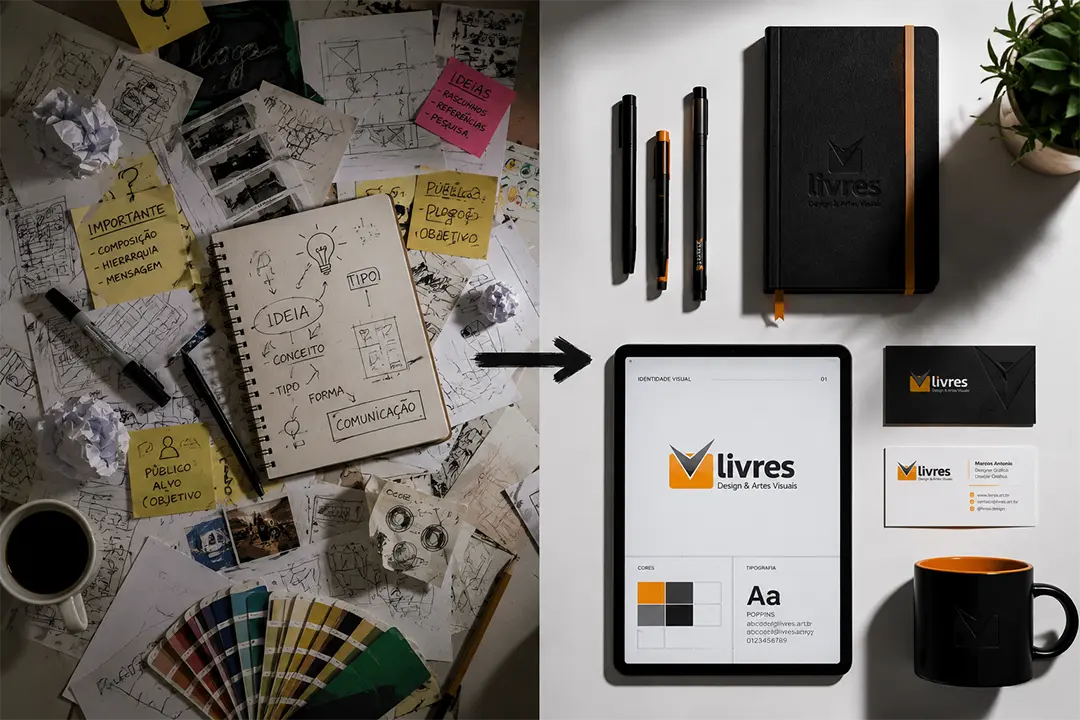
Many people still believe design is simply about “making things look good.” But anyone working in the creative industry knows that design goes far beyond aesthetics.
A well-crafted visual project organizes information, communicates ideas, creates recognition, and connects people to brands, products, and experiences. Whether developing a visual identity, a website, a publication, or a digital campaign, designers translate goals into strategic visual communication.
Design is present in almost everything we interact with daily. Product packaging, mobile apps, posters, social media content, websites, and even the way a brand is remembered all depend on visual decisions.
And because of that, design is not merely decoration. It shapes perception.
Design is more than aesthetics. It is communication
Every visual choice influences how a message is understood.
Colors create emotional responses. Typography affects readability and personality. Composition guides attention. Visual hierarchy organizes information. Images reinforce meaning.
These elements are not random decorations. Together, they form a visual language capable of building trust, recognition, and connection.
When designers create a project, they are not simply arranging visuals. They are solving communication problems.
A logo must represent a brand. A website must guide users clearly. A publication must organize information in a readable way. A visual campaign must speak to the right audience.
Design is intention. Strategy. Perception.
How design impacts brands and businesses
For some companies, design still feels like an optional investment. In reality, visual communication directly affects how people perceive a business.
A poorly designed identity can communicate disorganization or lack of professionalism. On the other hand, a strong visual system creates recognition, credibility, and consistency.
Good design helps businesses:
- communicate clearly;
- stand out from competitors;
- strengthen brand identity;
- improve user experience;
- create emotional connection with audiences.
In an increasingly visual and digital world, brands that ignore communication often struggle to stay relevant.
And this applies not only to large companies. Independent creators, freelancers, educators, artists, and small businesses also benefit from strong visual presence.
What happens behind the scenes of design
One common misconception is that designers simply “open software and create graphics.” But the process involves much more than technical execution.
Design work includes:
- research;
- briefing;
- visual strategy;
- concept development;
- reference analysis;
- testing;
- refinement;
- decision-making.
In many cases, designers also help clients better understand their own goals and communication challenges.
Before aesthetics comes thinking.
A successful visual project depends on understanding:
- audience;
- context;
- objectives;
- language;
- positioning;
- message.
Design is not accidental. Every detail carries intention.
The relationship between client and designer
Communication is one of the most important parts of any creative project.
When clients and designers align expectations, goals, and references clearly, the entire process becomes more effective.
That is why briefing matters so much.
Clients need to communicate their needs honestly and clearly. Designers need to listen carefully, interpret information, and justify visual decisions professionally.
Design is not guesswork.
The stronger the collaboration, the stronger the final result.
For those starting a career in design
Many beginners believe mastering software is enough to become a good designer. But technical skills alone are not what define great creative professionals.
Software changes constantly. Visual thinking, creative sensitivity, cultural references, and problem-solving abilities are what truly matter over time.
Some essential skills for designers include:
- developing visual perception;
- understanding communication;
- studying typography and composition;
- building cultural references;
- learning presentation skills;
- practicing creative thinking;
- improving professional organization.
And perhaps most importantly: understanding that design is also about people.
Design has value
Creative work is often underestimated. Expressions like “it’s just a graphic” reveal how misunderstood design still is in many contexts.
But design is not just execution.
Behind every professional visual project there is:
- research;
- experience;
- creative direction;
- strategy;
- problem-solving;
- intentional decision-making.
Understanding the value of design means understanding how visual communication influences the way people perceive brands, products, ideas, and experiences.
And that impact is real.
Beyond appearance
Design is part of nearly everything that communicates visually today. Because of that, its value should never be reduced to aesthetics alone.
A strong visual project organizes messages, strengthens identities, and creates meaningful connections between people and brands.
Whether you are hiring a designer or starting a creative career, understanding the real role of design also means understanding the power of visual communication in the modern world.
Because in the end, design is not only about appearance.
It is about meaning, perception, and connection.